Rédaction Africa Links 24 with Roxanne Bouenguidi
Published on 2024-03-06 18:11:02
The statement signed by the ministers responsible for Institutional Reform and Interior rekindles the not-so-glorious memory of the failed Political Consultation in March 2023.
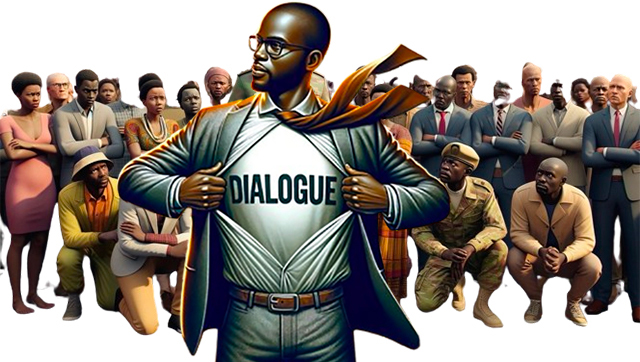
On the path to the “refoundation of the State,” the construction of “strong, credible and legitimate institutions guaranteeing a state of law, a transparent and inclusive democratic process (…),” this may be one of the most consequential decisions ever made since the advent of the Committee for the Transition and Restoration of Institutions (CTRI). Through a statement signed by the ministers in charge of Institutional Reform, Interior, and Security, the government invites “legally recognized political parties” to “propose four (4) members each, from whom will be chosen the representatives of the political class at the Inclusive National Dialogue.” As anticipated, this information revives the not-so-glorious memory of the failed Political Consultation of March 2023. Moreover, it casts doubt on the intentions of the CTRI and on the inclusiveness of this eagerly awaited meeting, universally seen as a decisive step in the ongoing political process.
Water on the mill of the detractors of the CTRI
Without succumbing to catastrophism, it is important to recall some simple things. So far, the Transition President has left the impression of wanting to evolve political practice. Respecting specificities, he has multiplied contacts. Parties or political personalities, actors of civil society, corporate organizations, all social forces have conversed with him by choosing their representatives themselves. At the time of setting up the Parliament or when composing his cabinet, some actors were consulted. Each time, they had the freedom to designate their representatives. Even if frustrations arose regarding the special delegations or appointments in the high administration, participation and respect for the sovereignty of the parties have undoubtedly been the foundation of the Brice Clotaire Oligui Nguéma method. Why should he abandon these principles?
From the beginning and, even more so, since the publication of communication No. 0026 regarding the Transition timetable, the Inclusive National Dialogue has been the subject of all kinds of conjectures. On its format, as well as its legal status, the composition of the organizing committee or the modalities of delegate selection, questions and proposals abound. Drawing lessons from the 1990 National Conference, the 1994 Paris Agreements, and the 2017 Angondjè Dialogue, some argue for a sovereign and inclusive meeting. Striving to define good practices in comparison to the monumental failure of March 2023, others advocate for the designation of participants by their organizations. For both, the preparatory seminar held on February 10th at Cap Caravane did not provide answers. In such a context, the government’s statement is not reassuring. At most, it reinforces skeptics, adding fuel to the fire of the detractors of the CTRI. After all, only the leaders of an organization are capable of identifying the best-equipped people to defend their options.
The CTRI facing itself and its credibility
Unless one harbors no collective intentions, one cannot turn a deaf ear to the complaints and suggestions of the public. Unless nurturing undisclosed ambitions or being prepared to deal with the worst, one cannot replicate the mistakes of the fallen regime. As Deputy of the Transition Geoffroy Foumboula Libéka Makosso reminds us: “We cannot continue with the same practices, producing the same results unless we refuse to learn from what led our country into this situation.” In other words, neither the organization of the meeting nor the choice of participants should be the government’s responsibility, already busy with leading the nation’s policies. On specific issues or activities, such as the Inclusive National Dialogue, it seems more fruitful to opt for the establishment of committees dedicated to these tasks alone, as we have repeatedly affirmed, to no avail.
If tested by facts, the CTRI finds itself facing itself and its credibility. It would be best to remain faithful to its initial commitments and to understand the expectations of the people. It must grasp the motives for the adherence to its actions. For the CTRI, and for the Transition President, this is the real challenge. At this stage, there is no point in rushing or turning a deaf ear to dissenting voices. Unless they want to risk disappointing the hopes placed in them or working towards the failure of the Inclusive National Dialogue, the CTRI can still reconsider the mode of delegate selection, even if it displeases the cunning minds lurking in the shadows.
Read the original article(French) on Gabon Review