By Africa Links 24
Published on 2024-02-21 11:46:11
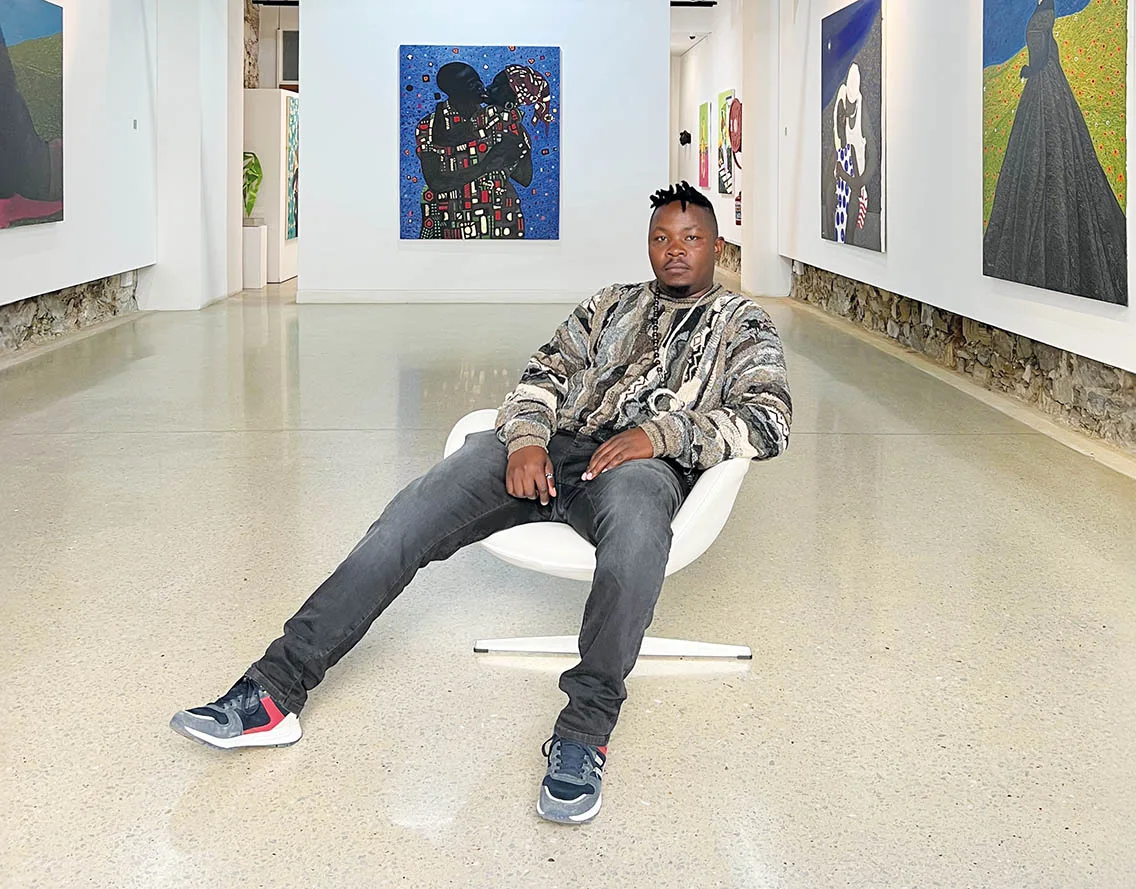
It had been a long time since I had visited Nedia Were’s studio. Our interactions had been sporadic in the immediate post-Covid season. But that was about to change as I eagerly awaited my meeting with him at the Artcaffe Gastro in the upscale Westlands District of Nairobi. Our purpose for meeting was to connect with New York art dealer Aeon Cummings, a former VP at JP Morgan and GE Capital who was now building his art advisory business, focusing on African and Caribbean artists. His 11,000 km flight to see Nedia and explore Nairobi’s art scene was a testament to the value he placed on Nedia and the untapped potential of the local art scene.
Nairobi is steadily becoming an important regional arts destination as a growing number of new and emerging artists are gaining international acclaim. This list includes exciting names such as Beatrice Wanjiku, April Kamunde, Peterson Kamwathi, Onyis Martin, Dickens Otieno, Shabu Mwangi, and Boniface Maina. They join established international household names from Nairobi such as the highly acclaimed Wangechi Mutu, Michael Armitage, Kaloki Nyamai, Syowia Kyambi, Chemu Ng’ok, Thandiwe Muriu, and, of course, the award-winning Nedia Were.
Nedia Was born 35 years ago to a working-class family in Langas Estate in Eldoret, a laid-back rural farming town 300 km northwest of Nairobi. His mother had wanted him to follow in the footsteps of his late father and become a school teacher, seeking to provide him with a career path she perceived as offering job security. However, Nedia had different aspirations, leading to a bitter falling-out with his mother. Despite the disagreement, he was determined to prove that he had a better plan. He set up a roadside freelance sign-writing business called “Dickson Signs” and later ventured into the art world.
After moving to Nairobi in 2015, Nedia met Patrick “Panye” Mukabi, who became his mentor at the famous Dust Depo Artists Collective. This marked a turning point in Nedia’s artistic journey. His debut exhibitions at the upscale Karen Country Club, followed by his success at the Manjano Art Prize in 2017, propelled him into the international art market. His art began to challenge representations of black bodies in media and advertising, with his Mumwamu series particularly gaining attention for promoting pride in one’s color and identity, as well as countering the dehumanization of those with black skin.
Nedia’s artistic voice sought to show empathy for victims and challenge the perpetrators of social and political disenfranchisement. His distinctive use of pitch-black color on the faces and skin of his subjects aimed to redeem the black pigment from the “pigeon hole” to which it had been consigned in the art world. Nedia’s artistic mission and visual vocabulary attracted international acclaim, with his work being exhibited in over 30 shows, from Miami to Cape Town and at art fairs such as Frieze, the Joburg Art Fair, the Investec Art Fair, and the Florence Biennale.
His portrait titled Barua Si Yangu (“the letter is not mine”) sold for £22,500 at Sotheby’s auction house in London, and many of his works have found their way to the secondary market, where his average auction price is about £12,000. Nedia emerged as the second-most-tracked emerging artist from Africa on Artsy.com in 2022, with gallery prices ranging from $7,000 to $15,000. His journey from a backwater existence to a prominent place in the art world has been driven by childhood dreams, personal muses, social circumstances, and dogged self-determination.
His achievements include the acquisition of his Untitled work by the New Museum in Berlin and a placement in the landmark exhibition “4000+ Years of African Art” at the Wall House Museum on the island of St.Barts. Aeon’s wager on this rising artist begins to make sense, with his talent and perseverance promising significant returns. Nedia Were’s story is a testament to the power of art to challenge established norms and defy stereotypes to champion identity and political discourse.