Rédaction Africa Links 24 with Africanews
Published on 2024-02-01 12:59:16
Selma Feriani is a renowned figure in Tunisia, known for her efforts to establish the North African country as a major player in the global contemporary art scene. With a strong presence in both Tunisia and the UK, where she has two established galleries, Feriani has recently inaugurated an impressive 800m2 museum-quality exhibition space in Tunis.
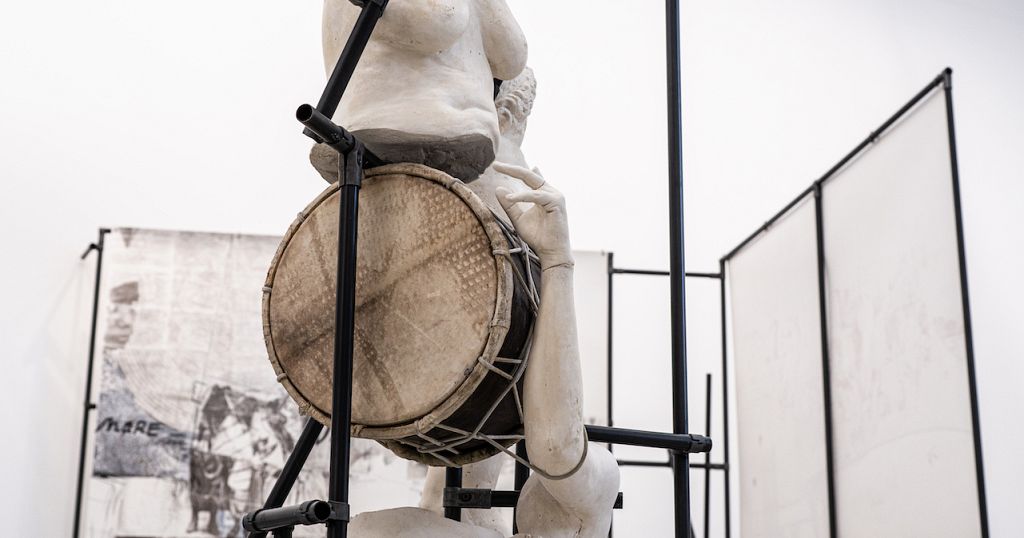
Currently in display at this exhibition space is the work of Nidhal Chamekh as part of the “Et Si Carthage?” exhibition, which translates to “And what if Carthage…”. The title of the exhibition is inspired by a verse from French philosopher Édouard Glissant, who visited the city in 2005.
Feriani emphasized the significance of showcasing the work of a Tunisian artist, stating, “Starting with an exhibition by a Tunisian artist was important to me. This exhibition is about our past, our history but also our modern history.” Chamekh’s art delves into the history of the 2nd century BC destruction of the ancient city of Carthage by the Romans, with the poem dedicated to neighboring Carthage serving as a common thread throughout his work.
The artist connects historical events with modern episodes, particularly focusing on the journey of exiled individuals leaving the shores of North Africa to reach Europe. His artwork encompasses graphic panels, collages, sculptures, and African masks, all of which contribute to the multidisciplinary nature of the exhibition. Chamekh’s use of African masks in his installations adds a profound depth to the narrative, with one artwork featuring a grimacing mask wearing a hoodie, symbolizing the themes of African origin, exile, and migration.
Chamekh, at 38 years old, draws parallels between the Roman conquest of Africa and the European colonization of the continent, highlighting the shared objectives of both in civilizing the indigenous populations. He also points out how centuries later, countries like France and Italy used the history of Rome to portray themselves as the heirs of the ancient empire.
The “Et si Carthage exhibition” will be on display in Tunis until March 24th, offering visitors the opportunity to explore Chamekh’s thought-provoking reflections on history, migration, and the intersections of the ancient and modern worlds. Through Feriani’s commitment to showcasing Tunisian artists and her dedication to expanding the presence of contemporary art in Tunisia, she continues to contribute to the country’s growing significance in the global art landscape.
Read Original article on Africa News


