Rédaction Africa Links 24 with Addis Standard2
Published on 2024-02-20 10:54:31
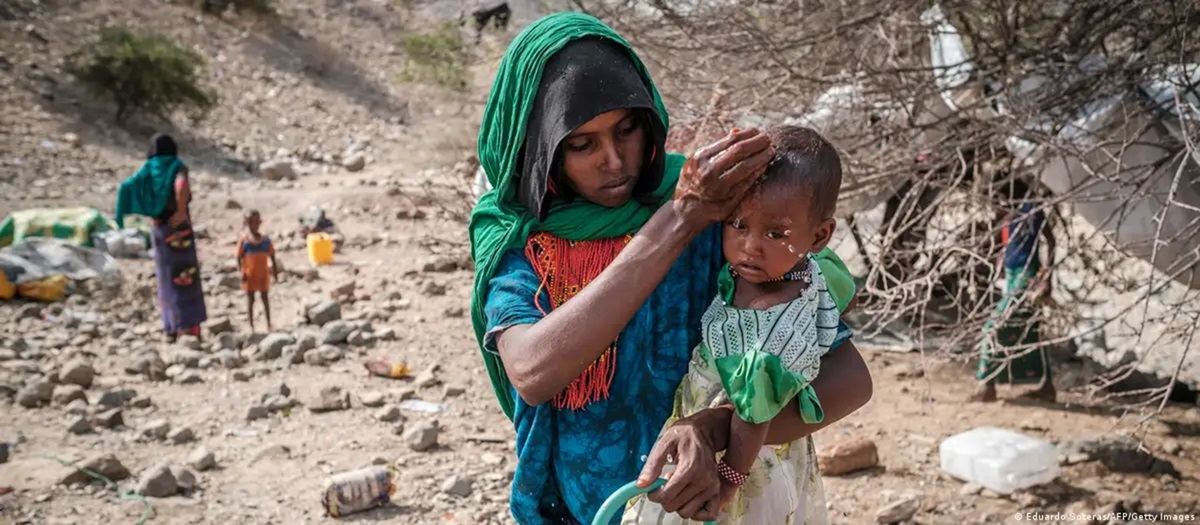
The Afar region is quickly becoming one of the most critically affected areas in the ongoing drought in Ethiopia. According to the latest update from the Ethiopian Disaster Risk Management Commission, approximately 330,000 people in Afar are in desperate need of emergency food aid. This marks a significant increase from previous months, with at least 70,000 more people being affected by the drought compared to earlier estimates by the government.
The severity of the situation is further highlighted by the fact that 56,000 quintals of food are urgently required to support the affected individuals for a two-month period. The number of people requiring aid has steadily risen, with the Commission estimating that over 253,000 individuals in the Afar region urgently needed emergency food assistance by the end of 2023. Despite efforts to provide aid, a report by the UN Office for the Coordination of Humanitarian Affairs (OCHA) revealed that only 208,800 people received the necessary support between June and December 2023.
The recent statement by the Commission announced that humanitarian support has been distributed to approximately 227,400 conflict- and drought-affected individuals in Afar. However, regional authorities believe that the actual number of people affected by the drought is much higher. Deutsche Welle reported that up to 40% of the region’s population urgently requires food and water supplies due to the drought. Mohammed Hussen, the head of the Afar Disaster Prevention and Food Security Office, conducted a survey that identified up to 600,000 people in the region affected by the drought.
The Afar region, along with Amhara and Tigray, has been identified by the Commission as one of the three most vulnerable regions, accounting for over 50% of the 6.6 million people nationwide in need of emergency food assistance from January to March 2024. To address the escalating crisis, the Commission estimates that 593,000 quintals of food are required to sustain the affected populations in these regions for a two-month period, with a total cost exceeding five billion birr.
Children and mothers are among the groups most affected by the ongoing drought in Afar. OCHA’s recent nutrition screening revealed alarming figures, with 4.3% of 40,000 children in hard-to-reach areas of Afar suffering from severe acute malnutrition (SAM) and 42% diagnosed with moderate acute malnutrition (MAM). Additionally, over half of the 44,000 screened pregnant and lactating women showed signs of acute malnutrition.
In addition to the human impact, the drought has also severely affected the region’s livestock, with over 3.5 million animals facing a scarcity of water and pasture due to the severe drought and depleted grazing lands. The invasion of thorny bushes further limits feed resources for the livestock.
Overall, the situation in the Afar region is dire, and urgent action is required to address the needs of the affected population. Both immediate and long-term solutions are needed to mitigate the impact of the drought and ensure the well-being of the people and animals in the region.
Read the original article on Addis Standard