Rédaction Africa Links 24 with Egypt Independent
Published on 2024-02-12 08:33:05
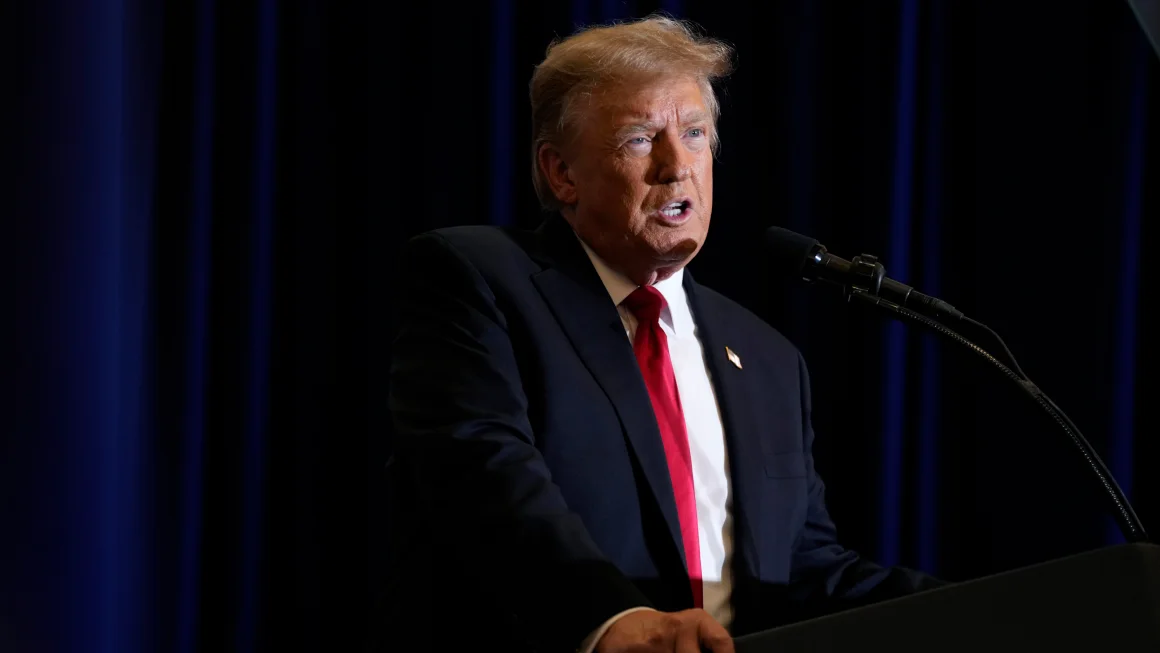
Former US President Donald Trump took the opportunity to mock President Joe Biden after Biden mistakenly referred to Egyptian President Abdel Fattah al-Sisi as the president of Mexico. The White House account on the X platform (formerly Twitter) published Biden’s statement in which he said, “Initially, the president of Mexico (sic), Sisi, did not want to open the gate to (allow) humanitarian material to get in. I talked to him. I convinced him to open the gate.”
In response, Trump posted a map on his social media accounts that identified Egypt as Mexico, clearly poking fun at Biden’s mistake. The exchange between the two US presidents garnered attention and sparked a response from Egypt’s Presidency regarding Sisi’s stance on the developments in Gaza.
The official statement from Egypt’s Presidency refuted the claims made by the US President, stating, “From the very first moment, Egypt opened the Rafah border crossing from its side without any restrictions and mobilized massive humanitarian aid and relief flowing from both Egypt itself and countries worldwide, who delivered their support directly to al-Arish Airport.” The statement highlighted Egypt’s efforts in exerting pressure on all concerned parties to ensure the flow of aid into the sector, while also addressing the obstacles caused by Israel’s repeated bombing of the Palestinian side of the crossing.
The incident not only highlighted the geopolitical implications of the situation in Gaza but also shed light on the dynamic between the current and former US presidents. It is not uncommon for political figures to use social media as a platform to express their views, engage in public discourse, and at times, take jabs at their counterparts. In this case, Trump’s response to Biden’s mistake serves as an example of how social media can be used by politicians to amplify their messages and influence public opinion.
The exchange also draws attention to the important role of accurate information and diplomatic relations on the global stage. The misidentification of a world leader by the President of the United States can have serious implications for international relations and diplomacy. It underscores the need for leaders to carefully communicate and verify information before making public statements, especially on sensitive geopolitical issues.
As the global community continues to face complex geopolitical challenges, it is crucial for leaders to prioritize effective communication, fact-checking, and diplomacy in order to navigate through such matters. The incident involving Biden’s mistake and Trump’s response serves as a reminder of the impact of political rhetoric and the importance of responsible leadership.
At its core, the incident reflects the broader issues of diplomacy, international relations, and leadership in the modern world. It also underscores the interconnectedness of global events and the role of social media in shaping public discourse and political narratives. Ultimately, the exchange between the two presidents serves as a notable example of the intersection between politics, social media, and international affairs in the contemporary era.
Read Original article on Egypt Independent


