Rédaction Africa Links 24 with Abdelh
Published on 2024-03-06 08:25:43
The Horn of Africa has long been a region of conflict and turmoil, with the main players being Ethiopian Imperialism and Somali Resistism, often with the involvement of outside forces. The roots of this conflict can be traced back to the 4th century when the Ethiopian Highlands embraced Christianity and began a mission to convert neighboring African tribes, including the nomadic Somali people. When Islam arrived in the 7th century, the Somali tribe saw a connection with their nomadic culture and embraced the religion, becoming part of the larger Islamic world.
The introduction of Islam added an ideological dimension to the conflicts in the Horn of Africa, turning it into a battleground between the cross and the crescent, with powerful external forces backing their respective allies. This led to a series of conquests, defeats, and shifts in power, with European colonialists arriving in the late 19th century to further complicate the situation.
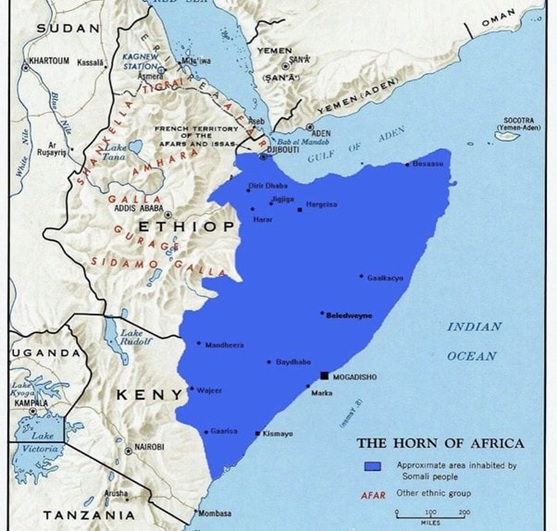
Somali nationalism emerged as a response to the division of Somali territories by European powers, with the goal of reuniting these fragmented lands. However, the nationalist movement was driven by emotion rather than pragmatic considerations, leading to conflict with colonial powers and neighboring states, ultimately leaving Somalia battered and defeated.
The militant nature of Somali nationalism can be attributed to the society’s history of tribal feuding, conquests, and survival against harsh environmental conditions. The arrival of Europeans was met with resistance from fearless warriors who saw themselves as equals to the white man. This resistance was exemplified by leaders like Sayid Muhammad Abdulle Hassan, who led a two-decade-long struggle against colonial powers before being defeated by British airpower in 1921.
After independence, Somali policymakers continued to harbor a nomadic warrior mentality, which clashed with the demands of modern diplomacy. The outbreak of the Ogaden War in 1977, which saw Soviet, Cuban, and Yemeni forces coming to Ethiopia’s aid against Somalia, was a wake-up call for Somali nationalists who had underestimated the military power of their opponents.
Arab nationalism also played a role in radicalizing Somali nationalists, with ties based on religion and shared grievances against Western powers. The influence of leaders like Gamal Abdel Naser of Egypt further stoked Somali nationalist sentiments, leading to the decision to invade Ethiopia in 1977 to reclaim the Ogaden region.
However, the era of radical nationalism eventually led to the collapse of the Somali nation in 1991, as internal divisions, external pressures, and shifting alliances took their toll. This marked a period of transition for Somalia, as winds of change and clouds of pragmatism began to shape the future of the region.
In conclusion, the history of conflict in the Horn of Africa is a complex tapestry of religious, ideological, and geopolitical factors that have shaped the region for centuries. The rise and fall of radical nationalism in Somalia serve as a cautionary tale of the dangers of unchecked emotion and the need for pragmatic solutions to complex problems. As the region looks towards the future, it will be essential to learn from the mistakes of the past and work towards a more stable and peaceful future for all.
Read the original article on Wardheer News


