Rédaction Africa Links 24 with YO Africa Links 24
Published on 2024-02-27 11:40:31
BURKINA-AGRICULTURE-SALON
SIAEL 2024: The Kingdom of the Netherlands shares its experience with Burkinabe youth
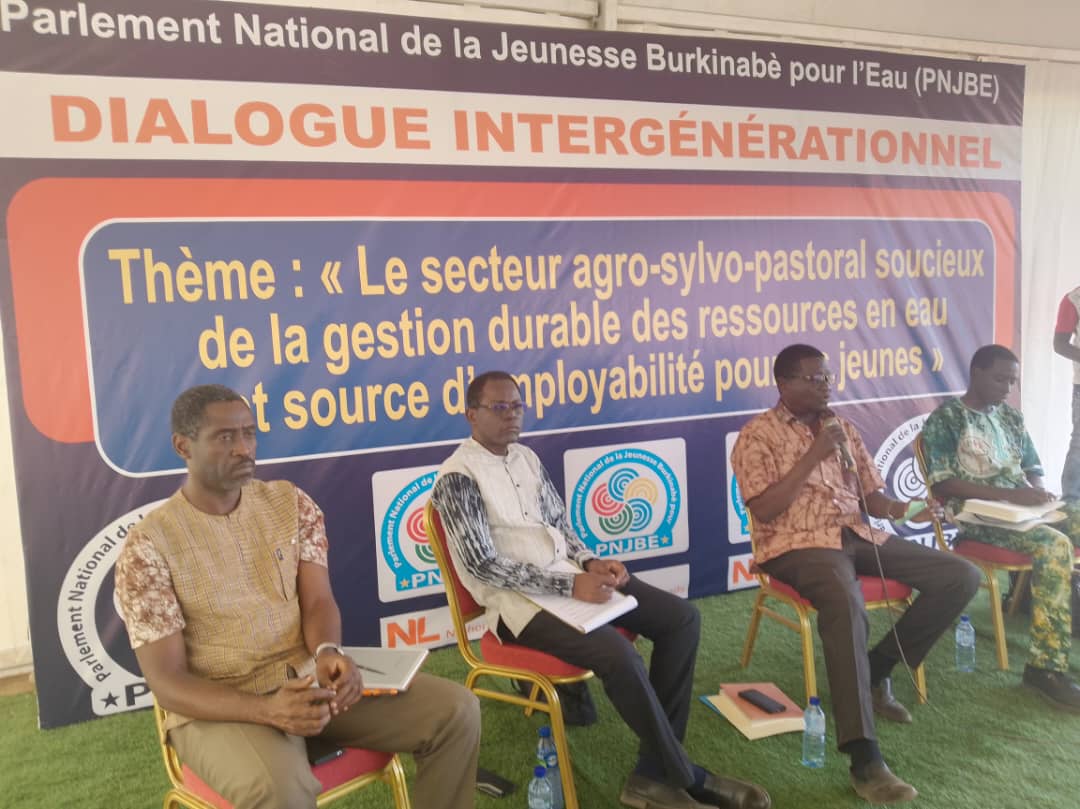
Ouagadougou, February 27, 2024 (Africa Links 24) – The Youth Parliament of Burkina Faso for Water (PNJBE) organized a panel on intergenerational dialogue on February 22, 2024 in Komsilga during the 7th edition of the International Agricultural, Environmental, and Livestock Fair (SIAEL), under the theme: the agroforestry sector concerned with sustainable water resource management and a source of employment for young people.
As part of the activities of the 7th edition of the International Agricultural, Environmental, and Livestock Fair (SIAEL) 2024, the Youth Parliament of Burkina Faso for Water (PNJBE) organized a panel on intergenerational dialogue.
Under the theme “The agroforestry sector concerned with sustainable water resource management and a source of employment for young people,” three presentations were made.
According to Esther Johanna Elisabeth Loeffen, the Ambassador of the Netherlands to Burkina Faso, the fact that her country is a major exporter in the field of agriculture is mainly due to the presence of rivers and factories nearby.
She mentioned that the Netherlands developed this with Europe and in addition to having a large port and a large airport, “it has facilitated us to produce precise products sometimes at lower cost.”
“I also mentioned during the conference that it also poses problems because it impacts the climate. So we have work to do to comply with the conditions and measures agreed upon within the framework of the COP,” she added.
For Mrs. Loeffen, it is essential to start at the grassroots level, where small-scale production is located, so that agriculture can have an impact on rural households.
The Ambassador of the Netherlands discussed the importance of having agricultural companies that can achieve great things while involving smaller entities.
“We are currently supporting Burkina Faso, especially actors at the rural level; we will assist and train them to connect to a more efficient system,” she continued.
The second presentation addressed the contribution of stakeholders in the agroforestry sector to the sustainable and efficient management of water resources, given by Michel Yameogo, a specialist in capacity building for actors in integrated water resources management and agroforestry stakeholders.
He first mentioned the consequences of climate change and insecurity on resources.
Yameogo explained that these are the underlying problems faced by Burkina Faso and the Sahel, as climate change leads to a loss of water resources in terms of quantity and quality, along with insecurity.
“As for the contribution of stakeholders in the agroforestry sector to water resource management, we have highlighted that these stakeholders represent the largest consumers and the sector alone consumes 60% of the available water,” Mr. Yameogo explained.
He urged stakeholders to be vigilant in the use of water resources and to avoid wastage.
Michel Yameogo mentioned that other actors also require water resources for consumption, industry, and tourism.
He deplored the deterioration in the quality of water resources due to pollution from agriculture and livestock activities, proposing strategic solutions to address this.
Ludovic Konditamdé, an expert in the development of non-timber forest products enterprises, discussed a theme to encourage young people to engage more in the agroforestry sector.
“We tried to demonstrate that it is a practically unknown sector, the information is not widely shared, and young people face an educational problem. They are not informed about opportunities in the agroforestry sector. Many young people in rural areas believe they are working in low-value jobs, while those in urban areas think these are neglected professions,” Mr. Konditamdé stated.
He emphasized the importance of specialization and mentioned that there are profitable sectors within the agroforestry industry.
“But what are the challenges to engagement? We need training, the necessary knowledge, and at least 3 months of coaching,” he concluded.
In conclusion, the 7th edition of SIAEL took place from February 20 to 27, 2024 in the rural commune of Komsilga under the theme “Impact of the security crisis on the agroforestry sector: status and perspectives” with Mali as the guest of honor.
Burkina Information Agency
HB/yo
Read the original article(French) on Agence d’Information du Burkina


