Rédaction Africa Links 24 with Africa News
Published on 2024-02-16 10:34:33
Algeria’s Economic Woes Worsen as People Flock to Black Market for Foreign Currency
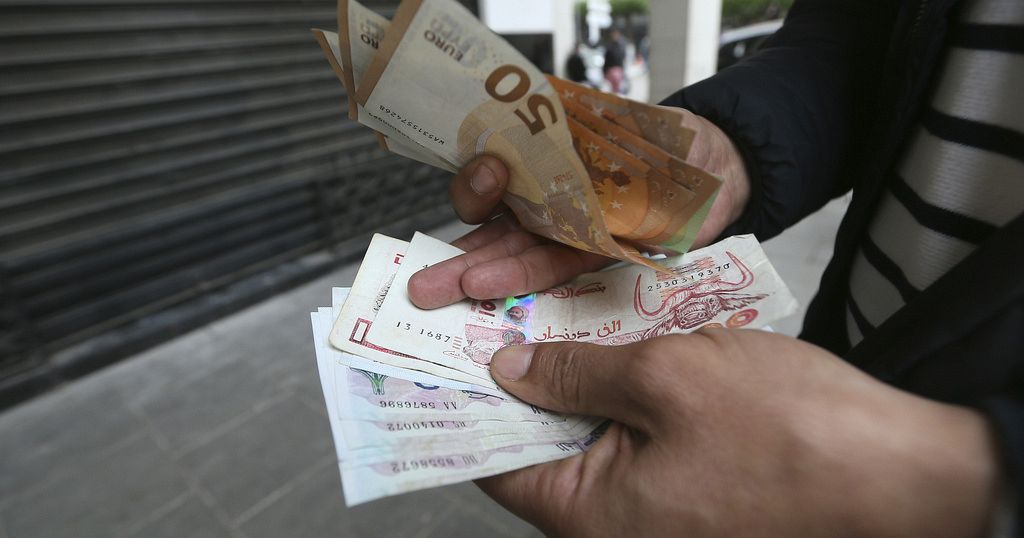
In the heart of Algiers, a square buzzes with activity, as currency traders clutch bundles of euros, pounds, and dollars in hopes of exchanging them for Algerian dinars. The black market for foreign currency is just one of the indicators of the economic hardships haunting Algeria. The state’s reluctance to allow the exchange rate to fully adjust has failed to curb the growing demand for foreign currencies among the population, as confidence in the dinar remains low.
The widening gap between the official and parallel exchange rates underscores the daily erosion of purchasing power for ordinary Algerians. The government has grappled with the challenge of balancing inflation, state spending, subsidies, and price controls to sustain the population.
In this oil-rich North African country, rumors of business owners offloading their assets and scrambling to acquire euros on the black market have surfaced. Even middle-class citizens rely on foreign currencies to acquire scarce goods such as medicine, vehicle parts, and specific food items. Last week, the official exchange rate allowed one euro to be sold for 145 Algerian dinars, while on the black market, the same euro fetched nearly 241 dinars – marking a staggering 66% difference from the official rate.
For many Algerians, like 72-year-old retired teacher Rabah Belamane from Algiers, the official exchange rate is a fiction. He lamented that his pension doesn’t stretch as far as it used to, whether in dinars or euros, emphasizing that the real value of the dinar lies in the informal market and not in the bank.
Algeria has long maintained a relatively closed economy, restricting the amount of foreign currency its citizens can access, primarily limited to a modest tourism allowance. This constraint falls far short of meeting the needs for activities like religious pilgrimages or visiting family in Europe’s vast Algerian diaspora. The government estimates that roughly $7 billion worth of foreign currency changes hands on the country’s black market.
The existence of two parallel exchange rates has raised concerns among experts, highlighting the potential for economic distortions, reduced investment, and an increased susceptibility to corruption. Despite this, Algeria has been resistant to the prospect of devaluing the dinar, fearing that it could spark high prices and public discontent.
Traders operating within the black market are acutely aware that the gap between the official and informal exchange rates fluctuates constantly, with expectations for the disparity to widen further as Ramadan approaches.
The scarcity of euros in recent days has further compounded challenges for Algerians in accessing certain goods. However, some government officials perceive this as a positive outcome, attributing it to the success of import restrictions and regulations aimed at limiting the inflow of foreign currency into the country.
Over the years, Algeria has relied on substantial revenues from oil and gas to support its import-dependent economy. However, efforts have been made to curtail excessive imports and to target influential business figures known for overbilling and stashing profits abroad.
The country experienced a boost in energy prices amid the war in Ukraine, positioning itself as a beneficiary of Europe’s quest for alternative oil and gas suppliers. Despite this, Algeria grappled with food scarcity and soaring prices, fueling public discontent.
Economists, including Karim Allam, have expressed skepticism regarding the success of the government’s measures, expressing doubts about the allegations of capital flight and money laundering. Meanwhile, the declining value of the dinar on the black market stands as a stark symbol of Algerians’ diminishing purchasing power.
Ultimately, the people of Algeria continue to grapple with the adverse impact of inflation, which has eroded their purchasing power, plunging many into poverty. Belamane, the retired teacher, encapsulates the prevailing sentiment, describing the dinar as virtually worthless in the face of these economic challenges.
Read Original article on Africa News