Rédaction Africa Links 24 with Amina Aouadi
Published on 2024-02-18 15:14:54
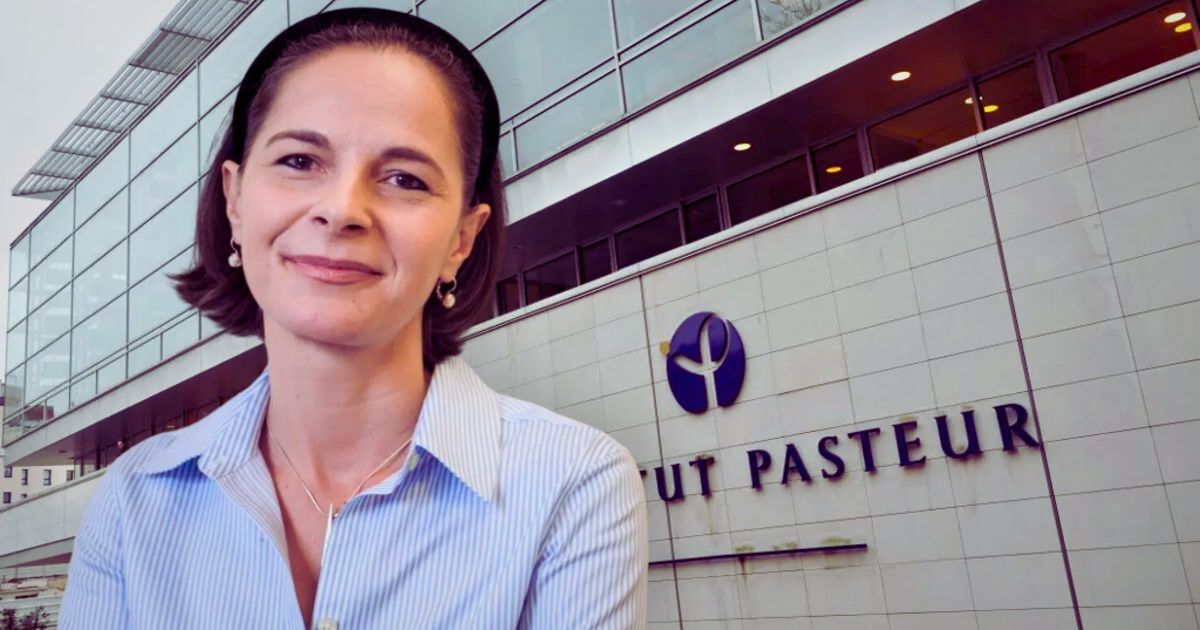
Professor Yasmine Belkaid, a world-renowned French-Algerian immunologist (trained at USTHB), took over the Institut Pasteur in January 2024 for a six-year term. She is the second woman to hold this prestigious position, and her appointment has been hailed by the scientific community, notably by Alain Fischer, president of the Academy of Sciences, who described her arrival as a “miracle.” Stewart Cole, her predecessor, also expressed enthusiasm for her arrival and described her career as brilliant.
Yasmine Belkaid takes the reins of the Institut Pasteur in a delicate context, in the midst of the post-pandemic period. Despite France’s recognition in medical research, the country has not been able to develop a vaccine. However, far from being discouraged, the researcher sees this as an opportunity. During her time in Washington, she was able to witness the excellence of French researchers in many fields.
The immunologist, whose work focuses mainly on the relationship between microbes and the immune system, draws a fundamental lesson from this health crisis: the need for more effective scientific communication, as she revealed in an interview with the French newspaper Le Figaro.
According to her, as long as the functioning of vaccines remains misunderstood by the general public, mistrust and rumors will continue to persist. For Yasmine Belkaid, the post-pandemic period represents a necessary pain that should guide us towards a deeper progress.
From Algeria to the heights of research: portrait of Yasmine Belkaid
Yasmine Belkaid, after studying biology at the University of Science and Technology Houari Boumediene in Bab Ezzouar, Algeria, obtained a master’s degree in biochemistry. She then continued her studies in France, earning a doctorate at the Institut Pasteur on innate immune responses to infection by the parasite Leishmania in 1996. Her career has been marked by the loss of her father, Aboubakr Belkaid, who was a minister and member of the FLN, and was assassinated in September 1995 during the dark decade in Algeria. This tragic event deeply affected her and was decisive in her decision to leave the country to start anew.
Despite this pain, she claims a dual cultural heritage, the result of her upbringing by parents from two different cultures: an Algerian father and a French mother, which explains her cultural richness and international path. Leaving for France to pursue her scientific dreams, the researcher flourished in the United States. There, she developed a collaborative vision of research, sharing her data and encouraging collective emulation, according to Geneviève Milon, a research director at the Institut Pasteur.
Her expertise in the relationship between the immune system and the microbiota has earned her international recognition and prestigious awards. Her long stay in the United States has left traces, in both her language, tinged with English, and her scientific approach.
The Institut Pasteur in the era of Yasmine Belkaid
Despite occasional doubts, Yasmine Belkaid has a clear ambition for the Institut Pasteur. Her firm response to sexist violence in the scientific world illustrates her determination to bring about change. In 2020, she co-signed an open letter on the subject, emphasizing the seriousness of the problem. Belkaid denounces the “countless subtle remarks” which, though seemingly trivial, undermine the confidence of women in science. She calls for a profound rethink of the traditional system, considering it ineffective and harmful to the progression of talent.
Two major axes guide Yasmine Belkaid’s scientific ambitions for the Institut Pasteur. On the one hand, she aims to address the challenges of climate change and understand the evolution of the new pathogens that result from it. On the other hand, she wants to develop a cross-cutting approach to the mother-child relationship in order to better understand the long-term impacts of inflammation and infections on health. A woman of the field, she will continue to conduct experimental research, a valuable asset for the Institut Pasteur and its ambitions.
Read the original article(French) on Algerie 360