By Rédaction Africa Links 24 with Agence France-Presse
Published on 2024-01-17 19:22:22
The conflict resolution body of the African Union held a meeting in Addis Ababa, Ethiopia to address the escalating tensions between Ethiopia and Somalia over a recent coastline deal. The meeting called for “restraint” between the parties involved.
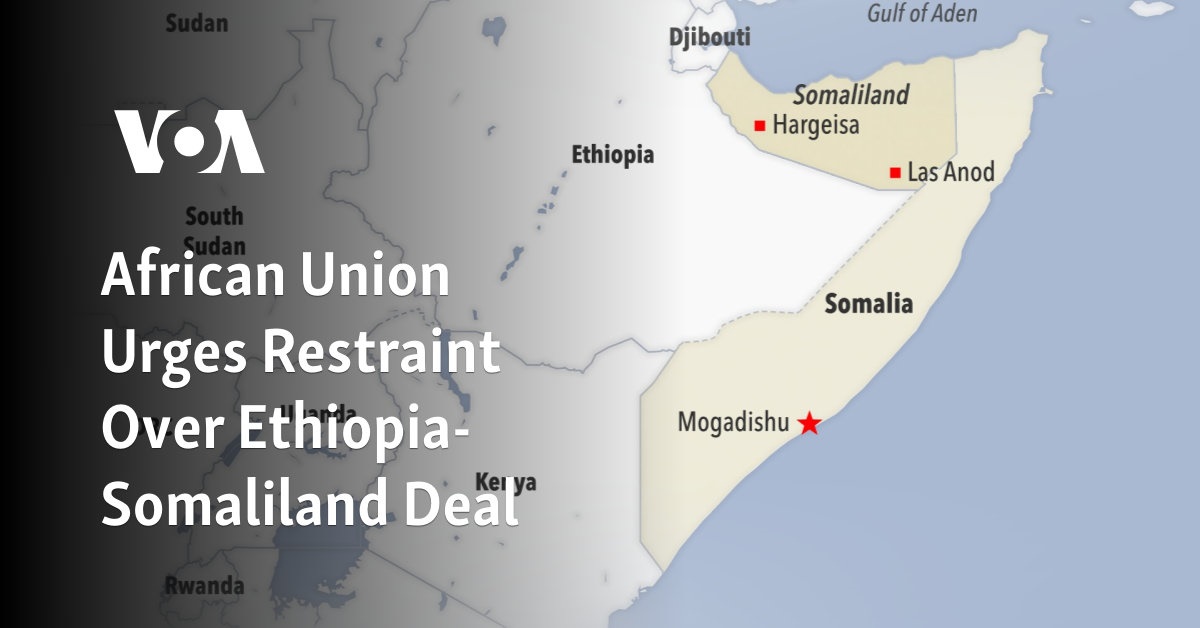
Ethiopia, a landlocked country, signed a surprise maritime accord with Somalia’s breakaway region of Somaliland on January 1, despite the rejection of the move by Mogadishu on grounds of violating international law. The Peace and Security Council of the AU expressed deep concerns over the ongoing tension and its potential adverse impact on the peace, security, and stability of the region. The council urged the neighboring countries to pursue “meaningful dialogue” and to exercise restraint and de-escalate the situation.
Somaliland, a former British protectorate, has declared independence from Somalia but is not recognized internationally. Under a memorandum of understanding, Somaliland agreed to lease 20 kilometers of its coast to Ethiopia for 50 years, with plans to set up a naval base and commercial port. Somalia has vowed to defend its territory by “all legal means” and has appealed to the United Nations and the African Union for urgent intervention.
The AU’s security council reaffirmed its strong commitment to preserving the territorial integrity of all its member states. International players, including the United States, European Union, China, and the Arab League, have called for respect for Somalia’s sovereignty. The tensions between Ethiopia and Somalia will also be discussed at a meeting of the East African trade bloc Igad on January 18 in Uganda.
Somaliland, with a population of about 4.5 million people, has been seeking formal statehood for more than three decades but remains unrecognized globally. Mogadishu opposes the independence claim, but in reality, it exercises little authority over the region, which has its own government, security forces, and currency.
Ethiopia, the second-most populous country in Africa and one of the largest landlocked nations in the world, lost its access to the coast after Eritrea declared independence in 1993 following a three-decade war. Since then, Ethiopia has mainly relied on Djibouti for its trade.
Read the original article on VOA


