By Rédaction Africa Links 24 with voanews.com
Published on 2024-01-17 18:06:35
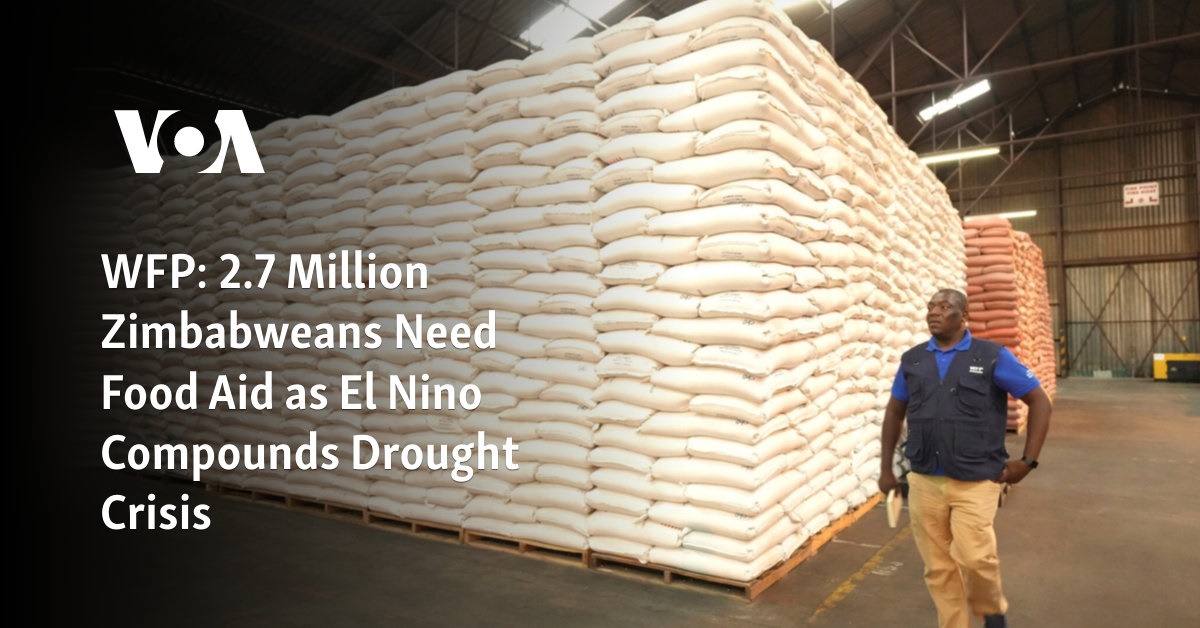
The U.N. World Food Program announced its collaboration with the Zimbabwean government and aid organizations to address the food scarcity affecting 2.7 million rural inhabitants in the country, exacerbated by the El Nino weather pattern causing a drought crisis in southern Africa.
The food shortages, which have put nearly 20% of Zimbabwe’s population at risk of hunger, are a result of poor harvests in drought-ravaged regions where small-scale farming is the main source of sustenance. Francesca Erdelmann, the WFP country director for Zimbabwe, highlighted the compounding effects of El Nino, which is expected to bring below-average rainfall, further worsening the situation.
El Nino, a recurring weather phenomenon that warms parts of the Pacific and impacts global weather patterns, has been identified as a significant factor in the ongoing crisis. The lean season in Zimbabwe, from January to March, is when rural households face food shortages while awaiting the next harvest.
With over 60% of Zimbabwe’s 15 million inhabitants residing in rural areas, the cycle of drought and floods, worsened by climate change, has greatly impacted their lives. The rainy season, previously reliable from October to March, has become erratic in recent years, leading to longer, more severe dry spells.
Once a food exporter, Zimbabwe has become dependent on aid from donors to feed its people, with agricultural production declining after the seizure of white-owned farms under former President Robert Mugabe. The United States Agency for International Development has estimated that 20 million people in southern Africa will need food relief between January and March, with Zimbabwe being one of the areas of highest concern.
The WFP has received an $11 million donation from USAID to support its efforts. While the Zimbabwean government has stated that the country has enough grain reserves to last until October, it has acknowledged the dire need for assistance among those who were unable to harvest sufficient grain and lack the means to purchase food from markets due to spiking staple food prices.
The effects of El Nino have also been felt in other sectors in Zimbabwe, as evidenced by the deaths of 100 elephants in a drought-stricken wildlife park. The impact of the El Nino-induced crisis is widespread, affecting millions of people throughout the region.
Read the original article on VOA